South Korea has reportedly canceled development of a supersonic anti-ship missile intended for its indigenous KF-21 fighter jets, citing low probability of long-range naval combat with neighboring countries, despite growing maritime threats from North Korea and China’s advancing missile capabilities.
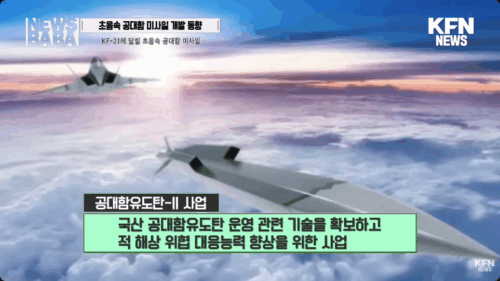
Screenshot from YouTube
The Korea Institute for Defense Analyses (KIDA) concluded last month that the Air-to-Ship Guided Missile-II program lacked “project feasibility,” effectively halting development of what would have been a critical weapon system for countering regional naval threats. The decision comes as project costs ballooned from an initial estimate of 564 billion won to 1.2 trillion won, more than doubling the original budget.
The canceled program was designed to equip South Korea’s domestically produced KF-21 fighter aircraft with supersonic anti-ship missiles capable of striking targets over 300 kilometers away at speeds of Mach 2-3. The advanced missiles would have dramatically reduced strike times from 16 minutes to approximately six minutes compared to the military’s current Harpoon missiles, while significantly improving the chances of penetrating enemy defenses due to their superior speed.
Development was scheduled to begin next year with mass production targeted for 2034, but no related budget has been allocated for the upcoming government fiscal year following KIDA’s assessment.
KIDA justified the cancellation by arguing that there was “low possibility of penetrating enemy defense systems” and “low probability of long-range engagement considering the navy’s procedures for responding to neighboring countries.” The dramatic cost increase from the original estimate also factored heavily into the decision to terminate the program.
However, the cancellation has drawn sharp criticism from defense experts and lawmakers who argue that KIDA’s assessment failed to adequately consider rapidly evolving regional threats. National Assembly Defense Committee member Yu Yong-won of the ruling People Power Party expressed concern that South Korean military leadership may be underestimating North Korea’s expanding maritime nuclear capabilities.
North Korea launched its 5,000-ton destroyer “Choe Hyeon Ho” in April, a vessel dubbed the “North Korean Aegis destroyer” due to its advanced capabilities. The ship is designed to carry tactical nuclear-armed ship-to-ground and ship-to-ship missiles, representing a significant escalation in North Korea’s naval warfare capabilities. In August, North Korean leader Kim Jong Un visited the vessel and directed military officials to accelerate “naval nuclearization,” describing naval operational capability development as a matter of “utmost national importance.”
The regional threat environment has grown increasingly complex with China’s development of advanced hypersonic anti-ship missiles. The YJ-17 missile system, displayed during Beijing’s Victory Day parade on Sept. 3, can be launched from aircraft or submarines and reportedly achieves speeds of Mach 8 with a range of 1,200 kilometers. This capability allows Chinese forces to strike maritime targets at extreme distances without exposing launch platforms to counterattack.
Military sources, speaking on condition of anonymity, criticized KIDA’s assessment methodology. One source questioned when missile interception risks became grounds for canceling weapons development programs, noting that the feasibility study appeared to overlook the specific threat posed by North Korea’s new destroyer capabilities. Another source highlighted the contradiction of South Korea abandoning supersonic missile development while China advances even faster hypersonic systems.
Yu emphasized the strategic importance of the canceled missile program, arguing that supersonic anti-ship missiles would provide South Korea with the capability to neutralize North Korean naval assets before they could launch nuclear-armed missiles. He warned that the military appears to be taking an overly complacent approach to North Korea’s expanding maritime nuclear threat capabilities.
The cancellation leaves South Korea increasingly reliant on aging Harpoon missiles as its primary anti-ship weapon system. While effective, these subsonic missiles require significantly longer flight times to reach distant targets and are more vulnerable to modern defensive systems compared to the supersonic alternatives that neighboring countries continue to develop.
The decision raises broader questions about South Korea’s defense procurement processes and the balance between fiscal responsibility and strategic necessity in an evolving security environment. With North Korea accelerating its naval modernization and China advancing cutting-edge missile technologies, defense analysts suggest that South Korea may need to reassess its approach to countering maritime threats.
The cancellation also impacts the overall capabilities of the KF-21 program, South Korea’s flagship fighter aircraft development initiative. The missile system had been specifically engineered for the KF-21’s operational requirements, with its compact 400mm diameter design allowing for efficient integration with the aircraft’s weapon systems. The versatile platform was intended to provide the KF-21 with both anti-ship and air-to-ground capabilities through sensor and warhead modifications. Without this advanced weapon system, the aircraft’s effectiveness in both maritime operations and multi-role missions will remain limited to shorter-range engagements using conventional weapons systems.
For more information, hit the Source below