The LIG NEX1-Korean Air consortium has emerged as the highest-scoring bidder in South Korea’s 1.78 trillion won ($1.29 billion) electronic warfare aircraft program, outperforming the competing Korea Aerospace Industries-Hanwha Systems team in technical evaluations, according to defense industry sources.
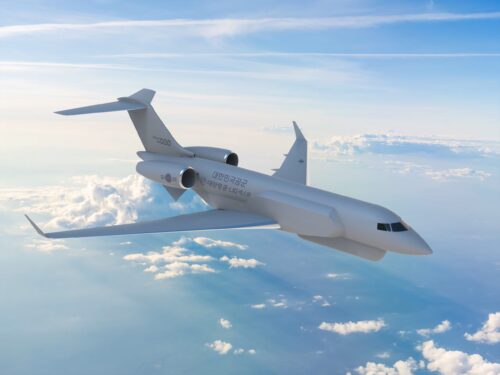
Graphic: Korean Air
The Defense Acquisition Program Administration is expected to announce the preferred bidder next month following completion of debriefing sessions, objection procedures, and evaluation verification processes. The program calls for development of four electronic warfare aircraft by 2034, marking South Korea’s entry into an exclusive technological domain currently mastered only by just a few nations.
The competition comes as North Korean GPS jamming operations have reached unprecedented levels, disrupting nearly 5,000 aircraft and 1,000 ships over the past 300 days while forcing down at least three South Korean Navy unmanned helicopters. Government data shows North Korea has transmitted GPS interference signals across the Northern Limit Line daily between October 2024 and August 2025.
South Korea’s Air Force currently lacks dedicated electronic warfare aircraft capable of actively countering such threats. The service’s existing Baekdu and Geumgang aircraft, based on converted business jets, are limited to passive intelligence gathering rather than active jamming operations. This capability gap has left South Korean forces dependent on U.S. Air Force assets such as the EC-130H Compass Call for electronic warfare missions.
LIG NEX1’s technical advantage appears to stem from its comprehensive electronic warfare portfolio spanning multiple military domains. The company developed South Korea’s first domestically produced fighter aircraft electronic warfare system, the ALQ-200, and is currently finalizing the integrated electronic warfare suite for the KF-21 fighter program. Its naval electronic warfare system, SONATA, gained international recognition during the 2011 Aden Gulf operation when it successfully neutralized pirate radar systems.
Korean Air brings proven aircraft modification expertise to the partnership, having completed upgrades to P-3C maritime patrol aircraft and led the Baekdu-I reconnaissance aircraft conversion program. Industry analysts view this combination of electronic warfare systems expertise and aircraft modification experience as particularly well-suited to the program’s requirements.
The competing KAI-Hanwha Systems consortium emphasized different strengths in their proposal. KAI highlighted its aircraft manufacturing experience, particularly with the KF-21 supersonic fighter program, and its track record in obtaining airworthiness certifications for military aircraft. The team promoted potential synergies with existing programs, noting that Hanwha Systems supplies the AESA radar for the KF-21 and planned KF-21EX stealth variant.
The electronic warfare aircraft program represents a significant technological challenge, with requirements including a minimum 200-kilometer jamming range to provide coverage across the Korean Peninsula. The aircraft must perform multiple functions including enemy threat signal collection and analysis, neutralization of integrated air defense networks, and enhancement of friendly force survivability.
Modern warfare has demonstrated the critical importance of electronic warfare capabilities. In the ongoing Ukraine conflict, military experts estimate that jamming signals have disabled up to 75 percent of Russian and Ukrainian drones as of 2024. Electronic warfare affects not only unmanned systems but also communications, radar operations, and GPS navigation across all military domains.
The South Korean program follows a commercial aircraft conversion model, with the selected consortium responsible for transforming foreign-built civilian aircraft into specialized electronic warfare platforms. Development will proceed in two phases, with Block-I aircraft and initial standoff jammers completed by 2034, followed by Block-II systems incorporating artificial intelligence upgrades.
The program’s strategic importance extends beyond immediate tactical capabilities. Success would reduce South Korean reliance on U.S. electronic warfare assets and potentially position the country as a future exporter of advanced electronic warfare technology to allied nations.
Following completion of the current evaluation phase, the Defense Acquisition Program Administration will conduct formal debriefing sessions with both consortiums before opening an objection period. Assuming no successful challenges to the evaluation results, the preferred bidder designation should be finalized within the next month, setting the stage for contract negotiations and program launch.
The electronic warfare aircraft program represents one of South Korea’s most ambitious defense technology initiatives, combining domestic industrial capability development with urgent operational requirements driven by evolving regional security challenges. The outcome will significantly influence South Korea’s electronic warfare posture and defense industrial base for the coming decades.
For more information, hit the Source below