The number of annual “Buddy Squadron” joint air training exercises between the United States and South Korea has been reduced from eight to four sessions per year, according to reporting by Chosun Ilbo, raising questions about whether the change reflects the Lee Jae-myung administration’s efforts to scale back military drills that have drawn criticism from North Korea.
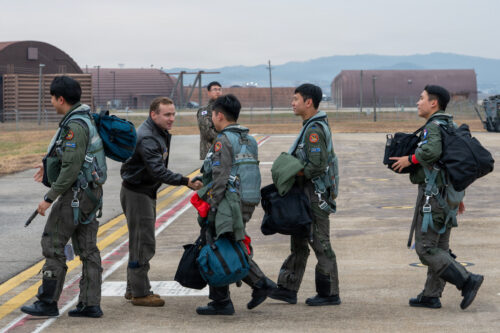
The South Korean Air Force announced on Feb. 9 that the first Buddy Squadron training of 2026 would run through Feb. 13 at Osan Air Base, and confirmed that the frequency of the exercises had been adjusted. The military said it would compensate for fewer training sessions by more than doubling the number of aircraft participating in each exercise and significantly increasing the number of sorties flown.
Chosun Ilbo’s reporting also revealed that only four of the eight originally planned Buddy Squadron exercises were actually conducted in 2025, a detail that had not been previously disclosed.
Air Force officials explained the reduction by pointing to the retirement of all A-10 attack aircraft stationed in South Korea last year and broader changes in force structure. “This is a number that South Korea and the United States agreed upon after considering conditions such as the retirement of the A-10 and force reorganization,” a military spokesperson said, adding that the quality of training had improved despite the reduced frequency.
However, military analysts quoted by Chosun suggest the cut may reflect a broader policy shift under the current government to minimize joint exercises that Pyongyang has consistently opposed. The reduction means Buddy Squadron training will no longer take place during the Freedom Shield command post exercise period, further dispersing major training activities throughout the year.
Buddy Squadron, originally known as Buddy Wing, is a bilateral joint exercise between U.S. Air Force and Republic of Korea Air Force units. This year’s first session involves South Korean KF-16, F-35A, and FA-50 fighters alongside U.S. F-16 aircraft.
The pattern extends beyond air exercises. During last August’s Ulchi Freedom Shield joint drills, the military announced that 22 of roughly 40 field training exercises would be postponed from the main exercise period to September, citing heat and other factors. According to Chosun’s reporting, only five or six of those exercises actually took place in September, with the remaining sessions not completed until December. Two of the delayed exercises were ultimately conducted by South Korean forces alone rather than as joint operations.
A military official told Chosun that U.S. scheduling issues and other factors make it difficult to complete all planned training.
For more information, hit the Source below