Lockheed Martin and Saab have both secured government approvals to compete for Peru’s major fighter aircraft modernization program, with the U.S. offering a $3.42 billion F-16 package and Sweden proposing JAS 39 E/F Gripen alternative in what has become South America’s most significant military aviation competition in decades.
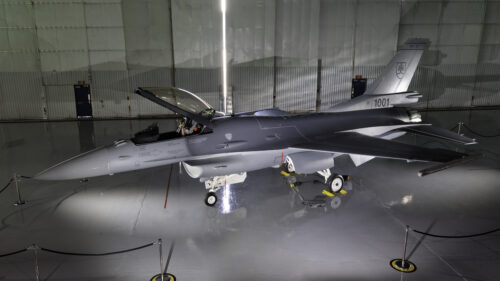
The U.S. State Department announced Sept. 15 approval for the sale of 12 F-16 Block 70 aircraft with comprehensive weapons and support systems, while Sweden authorized Gripen E/F negotiations through April budget amendments. Peru’s final selection will determine which Western defense contractor captures one of the region’s largest fighter procurement programs and establishes long-term strategic partnerships.
Both proposals target replacement of Peru’s aging Mirage 2000 and MiG-29 fighter fleet. The competition reflects broader U.S.-European rivalry in Latin American defense markets, where cost-effectiveness increasingly challenges traditional American dominance.
The U.S. proposal centers on delivering 12 F-16 aircraft to Peru, comprising 10 single-seat F-16C Block 70 variants and two twin-seat F-16D Block 70 trainers. The Defense Security Cooperation Agency’s notification to Congress details a comprehensive package that extends far beyond the airframes themselves, incorporating advanced weapons systems, electronic warfare capabilities, and extensive logistics support.
Key offensive capabilities include 12 AIM-120C-8 Advanced Medium Range Air-to-Air Missiles and an equivalent number of AIM-9X Block II Sidewinder short-range missiles, providing Peru with modern beyond-visual-range and within-visual-range engagement capabilities. The aircraft would be equipped with 14 F110-GE-129 engines, including spares, and feature advanced AN/APG-83 Active Electronically Scanned Array radars that represent the latest evolution in fighter radar technology.
The package emphasizes multi-mission flexibility with AN/AAQ-28 Litening targeting pods for precision air-to-ground operations, supporting what the State Department characterized as Peru’s counter-narcotics and counterterrorism mission requirements. Electronic warfare protection comes through AN/ALQ-254 Viper Shield systems, while situational awareness receives enhancement from Infrared Search and Track systems and missile warning capabilities.
Beyond hardware, the American proposal includes extensive training programs, simulators, technical documentation, and long-term contractor support services. Lockheed Martin of Greenville, South Carolina, serves as the prime contractor, with General Electric Aerospace of Cincinnati, Ohio, and RTX Corporation of Arlington, Virginia, providing engine and systems support respectively.
Sweden’s competing proposal offers up to 12 JAS 39 E/F Gripen aircraft through Saab, emphasizing lifecycle cost advantages and regional experience from Brazil’s successful Gripen program. The Swedish government authorized negotiations through Proposition 2024/25:99, explicitly noting revenue expectations and domestic industrial benefits.
The Gripen E/F represents Saab’s latest evolution with advanced avionics and enhanced payload capacity. While specific weapons configurations remain undisclosed, the platform supports modern air-to-air missiles and precision-guided munitions comparable to F-16 capabilities.
Sweden’s established South American presence through Brazilian Gripen operations could provide training and maintenance cooperation advantages, potentially reducing long-term operational costs compared to establishing new American-standard logistics chains.
The dual approvals underscore Peru’s strategic importance to both American and European defense establishments. The State Department characterized Peru as “an important partner which is a force for political stability, peace, and economic progress in South America,” linking F-16 sales to broader foreign policy objectives.
American officials emphasize territorial defense and sovereignty protection capabilities, particularly relevant given Peru’s extensive borders and counter-narcotics mission requirements. The State Department assessed that neither proposal would alter regional military balance, suggesting coordination with neighboring countries’ defense capabilities.
Sweden focuses on industrial cooperation and technology transfer opportunities, areas where European manufacturers often compete effectively against larger American prime contractors. The explicit revenue expectations indicate confidence in Gripen’s competitive positioning on both performance and cost metrics.
For more information, hit the Source below