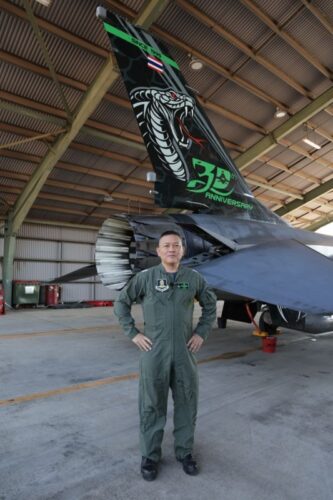
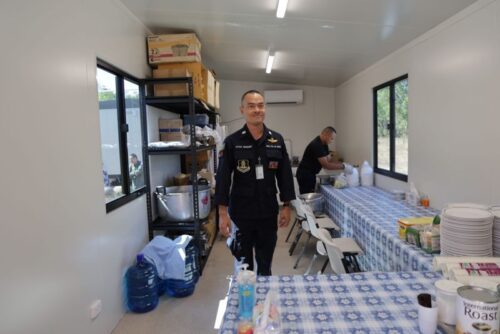
The smell of chicken noodle soup drifts across a stretch of tarmac at RAAF Base Darwin, competing with the scent of jet fuel. It comes from a kitchen the Royal Thai Air Force brought with it from home, staffed by cooks who start work at 3 a.m. and finish well into the afternoon, feeding nearly a hundred people three meals a day, sometimes four. It is, by the account of the officer running the detachment, one of the more important pieces of equipment his unit deployed to Australia this year.
“That builds up morale,” said Group Captain Nattavut “Neon” Duangsungnaen, a Gripen fighter pilot who is leading the detachment through Exercise Pitch Black 2026. “So Thai food is probably a good thing.”
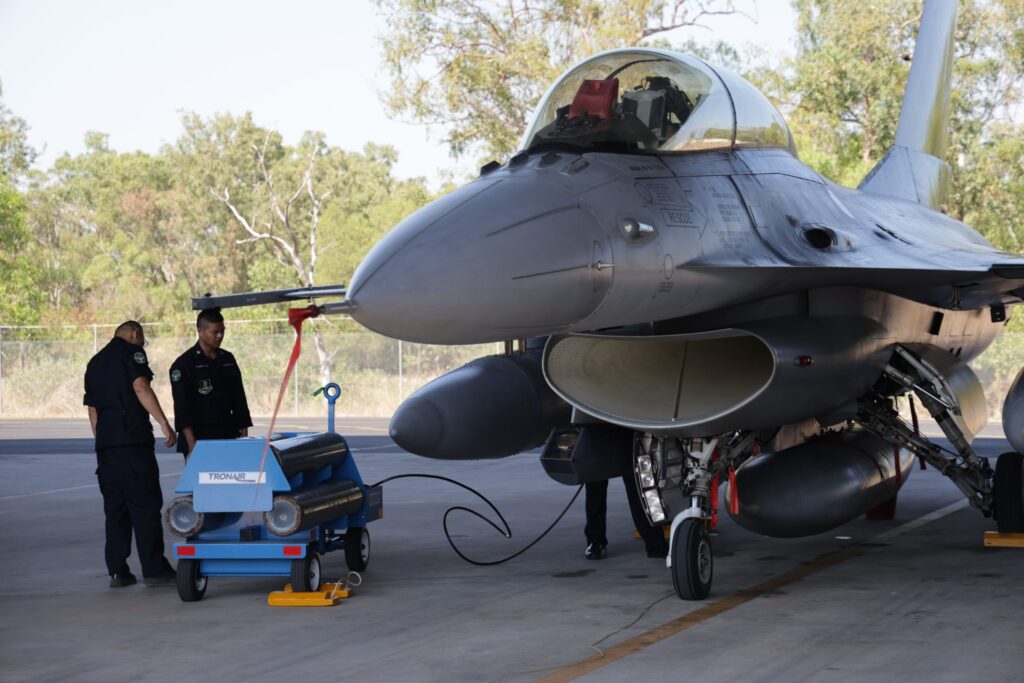
The kitchen is a small detail in a much larger return. This year marks the Royal Thai Air Force’s tenth participation in Pitch Black since it first joined the biennial, multinational exercise in 2004. The 2020 rotation was cancelled outright because of the pandemic, and in 2022 Thailand sent only observers rather than aircraft. But the more notable milestone is the aircraft on the ramp: five F-16s from the 403 Squadron, nicknamed Cobra, marking the type’s first appearance at Pitch Black in a decade. Thailand sent Gripens instead in 2014 and 2018. For many of the roughly 98 Thai personnel now working out of Darwin, this is their first exposure to an exercise of this scale.
A commander who came up through both jets
Group Captain Nattavut’s own career traces the two aircraft types that have carried the Thai Air Force through the past two decades. He flew F-16s before moving to the Gripen squadron, and served for years as one of the Royal Thai Air Force’s Gripen demonstration pilots. He has since stepped back from demonstration flying. For this deployment, he was tapped to lead the F-16 detachment instead, overseeing a unit built around a jet he flew earlier in his career.
He first came to Darwin for Pitch Black in 2008, when he was posted with 102 Squadron at Korat, then flying the F-16. He returned with the Gripen in 2014, the first time Thailand brought that aircraft to the exercise. This year, watching the F-16s return to the same ramp after ten years away, he noted that almost none of the current squadron’s pilots had been to Pitch Black before. The squadron commander from that earlier 2016 rotation is now a base commander back in Thailand.
Old airframe, updated capability
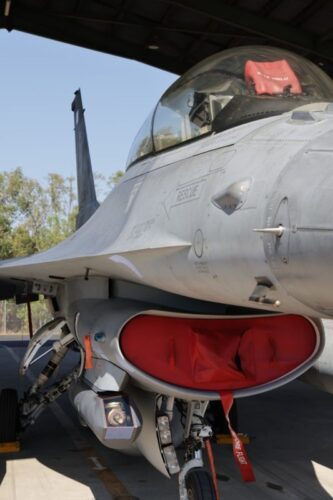
The F-16s Thailand brought are Block 15 airframes, among the oldest F-16 variants still flying, but they have been through a mid-life upgrade that brings them close to Block 40 standard, according to Group Captain Nattavut. That includes a new radar and beyond-visual-range missile capability, allowing the jets to carry the AIM-120 AMRAAM missile. For this exercise, the aircraft are flying with three external fuel tanks and a Sniper targeting pod, the first time the squadron has brought that pod to Pitch Black, and helmet-mounted cueing systems that let pilots aim short-range weapons simply by looking at a target rather than maneuvering the aircraft to bring the nose to bear. Pilots are also cleared to fly with night vision goggles, which the detachment has been using heavily this week during night sorties.
Group Captain Nattavut said the appeal of an exercise like Pitch Black is scale. Thailand’s own training areas are comparatively small and do not offer the density of aircraft and adversaries that pilots encounter in northern Australia. “We cannot train like this in Thailand,” he said, “because the area is not big. We don’t have many fighters to join in the same area during the same period.” The detachment has been flying both air-to-air and air-to-ground profiles, though he said pilots generally prefer the air-to-air sweep missions, in which they work to intercept and defeat opposing aircraft.
A conflict still close at hand
The deployment comes almost exactly a year after Thailand and Cambodia fought a short, intense border conflict that began on July 24, 2025. Thailand used F-16s against Cambodian positions along with Gripens and T-50 trainer jets.
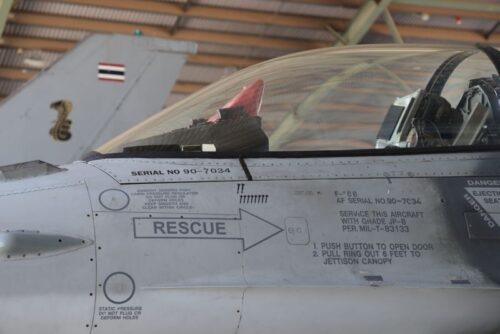
Group Captain Nattavut raised the conflict without being asked directly about it, noting that all aircraft in the detachment that dropped a laser-guided bomb during the fighting carries a small bomb mission mark below the cockpit, a tally of the weapons it released in combat. Several of the pilots sent to Darwin are senior aviators with that combat experience. “All our pilots have been through that situation,” he said.
Life behind the flight line
Away from the aircraft, the detachment’s routine looks much like any other visiting squadron’s, organized around a compact footprint of buildings the Royal Australian Air Force has provided since 2014, close enough to the flight line that Group Captain Nattavut said Thai crews can walk to their jets in minutes, an arrangement he contrasted with other national contingents based farther from the apron. Two hangars house the five F-16s, tighter quarters than the squadron is used to since the aircraft is larger than the Gripens that have occupied the same space in past years.
Beyond Pitch Black 2026
For now, though, the detachment’s focus remains the week ahead in Darwin. Group Captain Nattavut said he hopes Thailand will be back at the next Pitch Black, and the one after that. Asked what he would tell a young Thai considering a career in the air force, he did not hesitate. “The job is really exciting,” he said. “The money is also not so bad. If you would like to challenge yourself in doing something very special in your life, being in the air force, being the fighter pilot, is one of the jobs that you would like to try.”