For Lieutenant Colonel Mario C. Mendoza Jr., flying over northern Australia never loses its edge. As working group lead for the Philippine Air Force (PAF) contingent at Exercise Pitch Black, and an instructor pilot for the FA-50, Mendoza has spent the exercise navigating airspace far larger than anything he trains in back home.
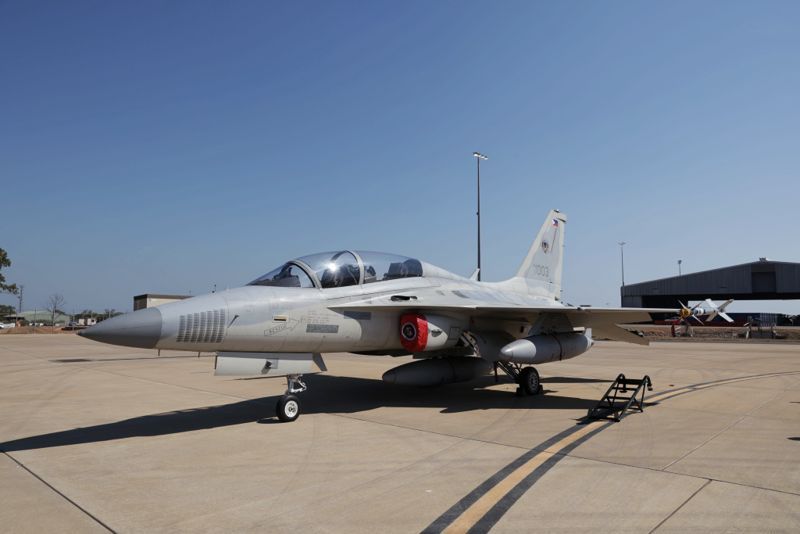
“Flying in Australia is always fun and challenging, especially that it’s a vast airspace,” Mendoza said. “Yes, in the Philippines, we also do have that kind of airspace, but we are limited in terms of the areas that we can be flown.”
The scale is only part of the challenge. With multiple countries operating in the same skies, coordination becomes as important as flying itself. Mendoza said the exercise draws on many of the same principles the Philippine Air Force applies at home, particularly when it comes to maintaining safety across a shared airspace with other nations’ pilots.
An upgraded jet with more on the way
The FA-50, the aircraft Mendoza flies and trains other pilots on, has undergone a series of upgrades to its avionics and weapon systems. Korea Aerospace Industries, the aircraft’s original manufacturer, is developing a more advanced version known as Block 20. The Philippine Air Force has already signed a contract for additional aircraft under that upgrade, with delivery expected in two to three years.
As a fighter attack aircraft, the FA-50’s central role at the exercise is offensive and defensive counter-air strike. Mendoza said the capabilities the jet brings to the table have drawn interest from other participating nations, who see value in what the Philippine contingent contributes to the broader coalition.
Taking on a larger role
This year marked a shift in how the Philippine Air Force operates within the exercise. In the past, PAF pilots flew primarily as part of a larger strike package, following the lead of other nations. This time, Filipino pilots took on leadership roles themselves, serving as flight leads and mission commanders responsible for directing entire packages during missions.
Mendoza pointed to the FA-50’s evolving role as well, describing an effort to move the aircraft toward offensive and defensive counter-air missions built around what he called “launch and leave” capabilities, a concept the Air Force is working to develop further. During a period known as fit week, PAF pilots flew what Mendoza described as 4-versus-X sorties alongside pilots from other nations, testing those skills in real time.
Simulated weapons, real-world stakes
Every fighter aircraft participating in the exercise simulates the use of its weapons systems, and the FA-50 is no exception. As part of a strike package, the aircraft carries air-to-ground capability that pilots simulate during missions at Pitch Black.
For ground targets, Mendoza said the Air Force favors precision-guided munitions for their efficiency. Those same munitions extend beyond land targets. The FA-50 is also capable of anti-surface attacks against vessels at sea, giving pilots the ability to engage moving targets with greater accuracy than conventional weapons allow.
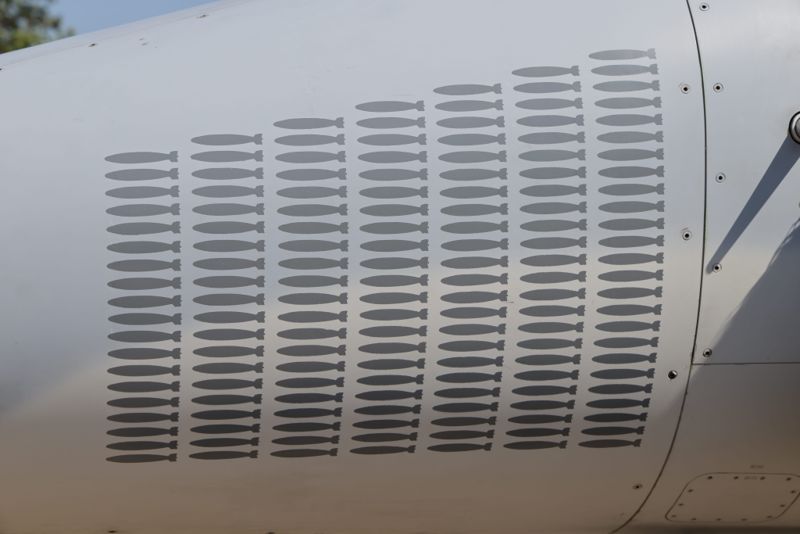
Even so, the aircraft’s history in actual combat is not far from view. Painted on the nose of the FA-50 are a series of markings, each one representing a real bomb dropped against enemy targets in the Philippines. Mendoza said those missions were not limited to strikes on insurgents. Some, he said, have targeted terrorist elements and other threats, a reality he said shapes how the aircraft is actually used at home.
“These are live missions,” Mendoza said. “We’re not putting anything here that is just for training.” Asked to clarify, he added, “real world missions,” underscoring that the markings reflect operations flown in earnest, not exercises.
Facing the F-35
Among the more notable experiences of the exercise for Mendoza was flying against the F-35 during fit week, where he took part in basic fighter maneuvers against the fifth-generation jet. He did not shy away from acknowledging the gap in technology between the two aircraft.
Asked how those dogfights went, Mendoza declined to share specifics, saying the results would stay within the contingent. He was, however, willing to size up the two aircraft in general terms.
“Compare F-35s and FA-50s, it’s easy that you can see that the F-35 is very high-advance,” Mendoza said. “But like what I said, we’re not going out there without a fight. If you use your strengths well as a platform, I think there’s a possibility and there’s always that chance for us to be on an offensive.”
A shift from counter-insurgency, not an exit from it
Mendoza described the Philippine Air Force as being in a period of transition, moving toward a greater focus on securing the country’s territory through air defense. Even so, he said the Air Force has not stepped away from counter-insurgency work. Aircraft remain devoted to close-air support and air interdiction in case those threats resurface. The goal, he said, is flexibility and operational readiness across both kinds of missions.
Building the next generation of pilots
The Philippine Air Force brought roughly 40 pilots to the exercise. Those with higher qualifications flew close to once a week, amounting to about three flights over the course of Pitch Black. Junior pilots followed a different track, spending time acclimating to the environment before taking to the air. Still, Mendoza said, every pilot got a chance to fly, whether in the front seat for those already qualified or the back seat for those still working toward it.
Looking toward modernization
For Mendoza, participation in exercises like Pitch Black carries weight beyond the immediate training value. It informs decisions the Philippine Air Force is still working through, particularly the long-running question of acquiring a multi-role fighter.
“It’s so hard to actually acquire platforms if you haven’t tested them yet,” Mendoza said. Being exposed to a wide range of aircraft, some far more advanced than what the Philippines currently flies, gives the Air Force a clearer sense of which platforms might fit its future needs and how they would work alongside allied forces. Mendoza framed the stakes in broader terms as well, noting that threats are not confined to any one country. “The threat is not just really within your country,” he said. “The threat is global and regional at the minimum.”
A career built on persistence
Away from the cockpit, Mendoza – who has more than 2,000 flying hours on the FA-50 – now serves as a director at Philippine Air Force headquarters, overseeing aircraft maintenance management across the fleet, a role that draws on his background in logistics. He remains an instructor pilot on the FA-50 even as his day-to-day responsibilities have shifted toward management.
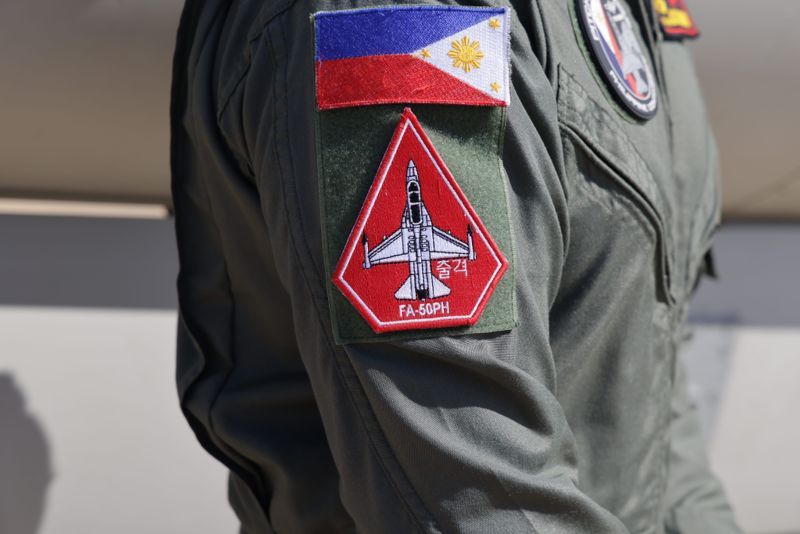
Reflecting on his own path, Mendoza offered advice for young people considering a similar career. He described the process as one that starts with motivation and a clear sense of purpose, built up over time rather than achieved overnight.
“You have to start with a vision of yourself,” he said. “With that motivation and dream from the start, it can carry you over until you reach your dream. Just don’t be upset or disappointed in case you actually encountered failures because there are so many of that as you go on.”