U.S. Air Force Special Operations Command (AFSOC) has evaluated a new small cruise missile in a live combat setting, an unusual step for a weapon system that has not yet entered full-rate production, the command announced Sept. 14.
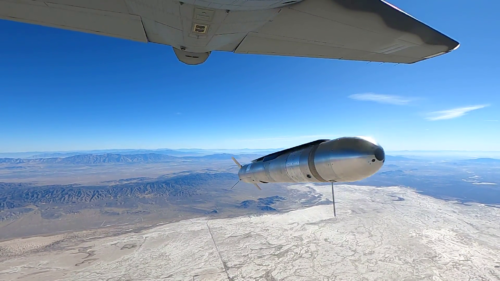
Photo: AFSOC
The missile, designated the AGM-190A and known as Havoc Spear, was put through a combat evaluation in the spring of 2026 in partnership with U.S. Africa Command (AFRICOM). AFSOC said the test met the requirements needed to move the missile toward broader use across special operations and conventional aircraft.
“Havoc Spear’s range and capabilities expands standoff options, giving commanders a versatile tool to neutralize threats without putting platforms or personnel in immediate danger,” said Lt. Gen. Mike Conley, commander of AFSOC. He added that testing a new weapon system in actual combat conditions allows the Air Force to confirm its performance early, rather than waiting until after it has been fully fielded.
The evaluation took place within AFRICOM’s area of responsibility. AFSOC’s own announcement did not name the aircraft involved, but reporting by Air & Space Forces Magazine identified the platform as an AC-130J gunship. According to that reporting, AFSOC officials told reporters at a roundtable that two AGM-190s were fired this spring at two validated ground targets in the AFRICOM area of responsibility. Officials did not disclose further details about the targets, but said the evaluations proved the missile to be accurate, reliable and operationally ready.
Gen. Dagvin Anderson, commander of AFRICOM, framed the test within the command’s broader counterterrorism mission on the continent. “We work every day to disrupt the networks that have made Africa the epicenter of global terrorism,” Anderson said. “These successful operational assessments prove we will continue to bring the unique capabilities only the U.S. can provide in order to defend U.S. interests alongside our partners.”
Havoc Spear was developed by Leidos and received its official Air Force designation in February. The Air Force describes it as a 200 pound class weapon with a modular hardware design and open system software, features intended to let it be adapted quickly as mission needs change. During earlier testing from a C-130 aircraft, the missile demonstrated a standoff range of more than 400 nautical miles. Leidos has marketed the system as a lower cost alternative for stand-off strike missions.
The path Havoc Spear took to reach this stage departs from how the Pentagon typically develops new weapons. U.S. Special Operations Command led the acquisition using a cooperative research and development agreement, a mechanism that allows the military to work more directly with industry partners and move through development faster than a standard program of record.
“To outpace our adversaries, we can’t rely on traditional acquisition pipelines,” said Col. Robert Johnston, AFSOC’s director of strategic plans, programs and requirements. He said the command is looking for less conventional paths to modernization that let it work more closely with industry and accept more risk in exchange for speed.
AFSOC framed the successful evaluation as part of a broader effort to maintain an edge over adversaries and support what it called uncontested global operations for the joint force and special operations community.
For more information, hit the Source below