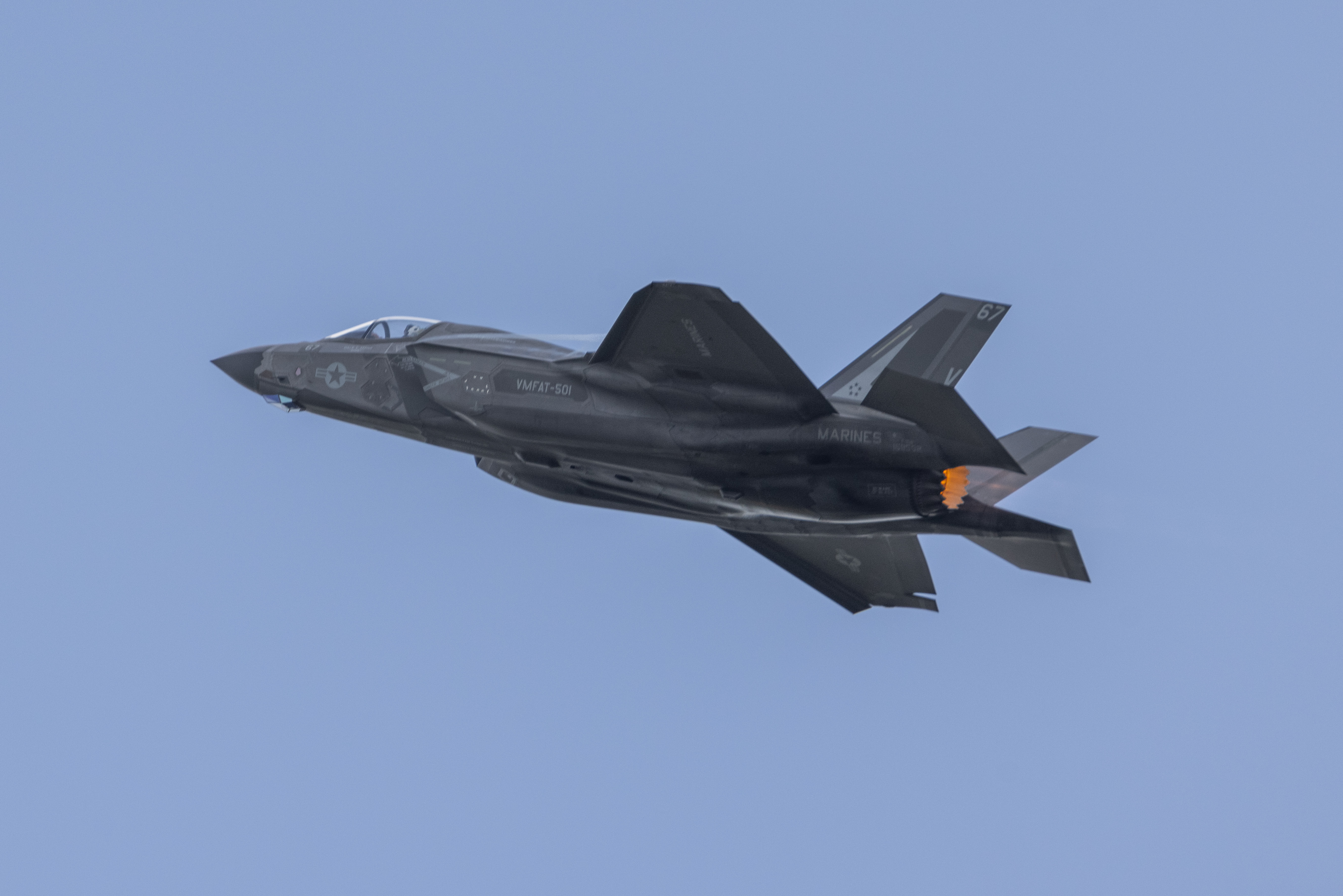
An F-35B fighter assigned to U.S. Marine Fighter Attack Training Squadron 501 (VMFAT-501) has crashed north of North Charleston. The pilot of the aircraft ejected safely but the
U.S. Marine Corps Maj. Zachary Ybarra, F-35B Lightning II pilot, Marine Fighter Attack Training Squadron (VMFAT) 501, Marine Aircraft Group (MAG) 31, 2nd Marine Aircraft Wing (MAW), performs aerial maneuvers during an airshow demonstration practice at Marine Corps Air Station Beaufort, South Carolina, Aug. 21, 2023. VMFAT-501 and VMFAT-502, MAG 11, 3rd MAW, are the two components that make up the USMC F-35B Lightning II Demo Team, that perform across the country to demonstrate the capabilities of the fifth generation fighter and interact with the public. Ybarra is a Rancho Cucamonga, California native. (U.S. Marine Corps photo by Lance Cpl. Kyle Baskin)
A routine landing at Coastal Carolina Airport in Craven County took an unexpected turn when a U.S. Marine Corps AV-8B Harrier jet experienced a blown tire on the runway, causing temporary disruptions to air traffic.
The United States Marine Corps (USMC) is poised to bolster its defense capabilities with the acquisition of the Iron Dome air defense system, a move outlined in an official notice of intent recently published on the System for Award Management site. This strategic procurement involves the acquisition of 1,840 Tamir interceptor missiles, 44 launchers, and 11 US-made command centers, signaling a significant enhancement to the Marine Corps’ air defense capabilities.
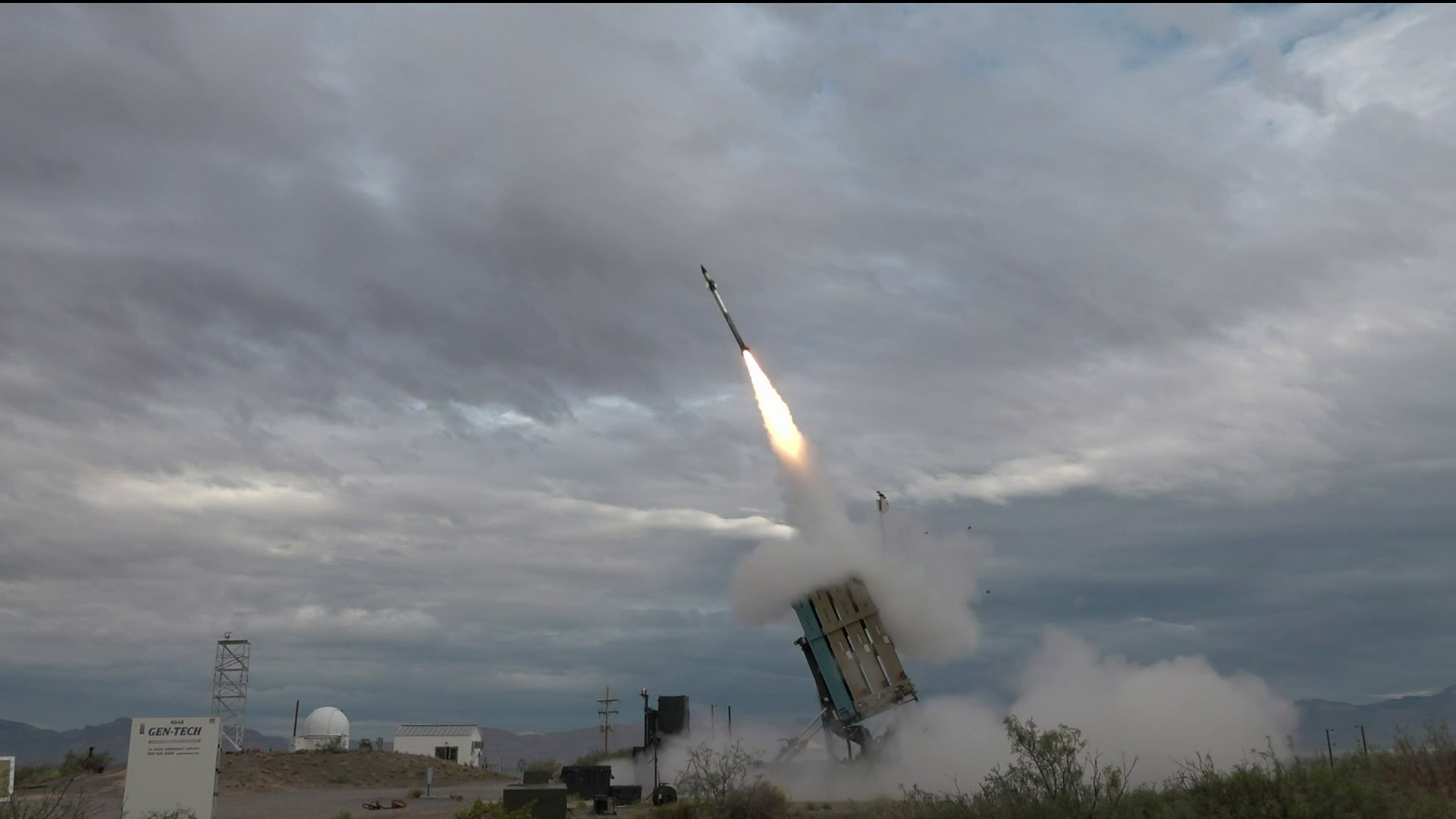
A BQM-177 is launched from the Marine Corps’ Medium Range Intercept Capability system during Live Fire 2 as part of a quad-launch event at White Sands Missile Range, New Mexico, in September 2022. A project of Program Executive Officer Land Systems, MRIC provides the warfighter with a state-of-the-art missile system that detects, tracks, identifies, and defeats enemy cruise missiles and other manned and unmanned aerial threats.
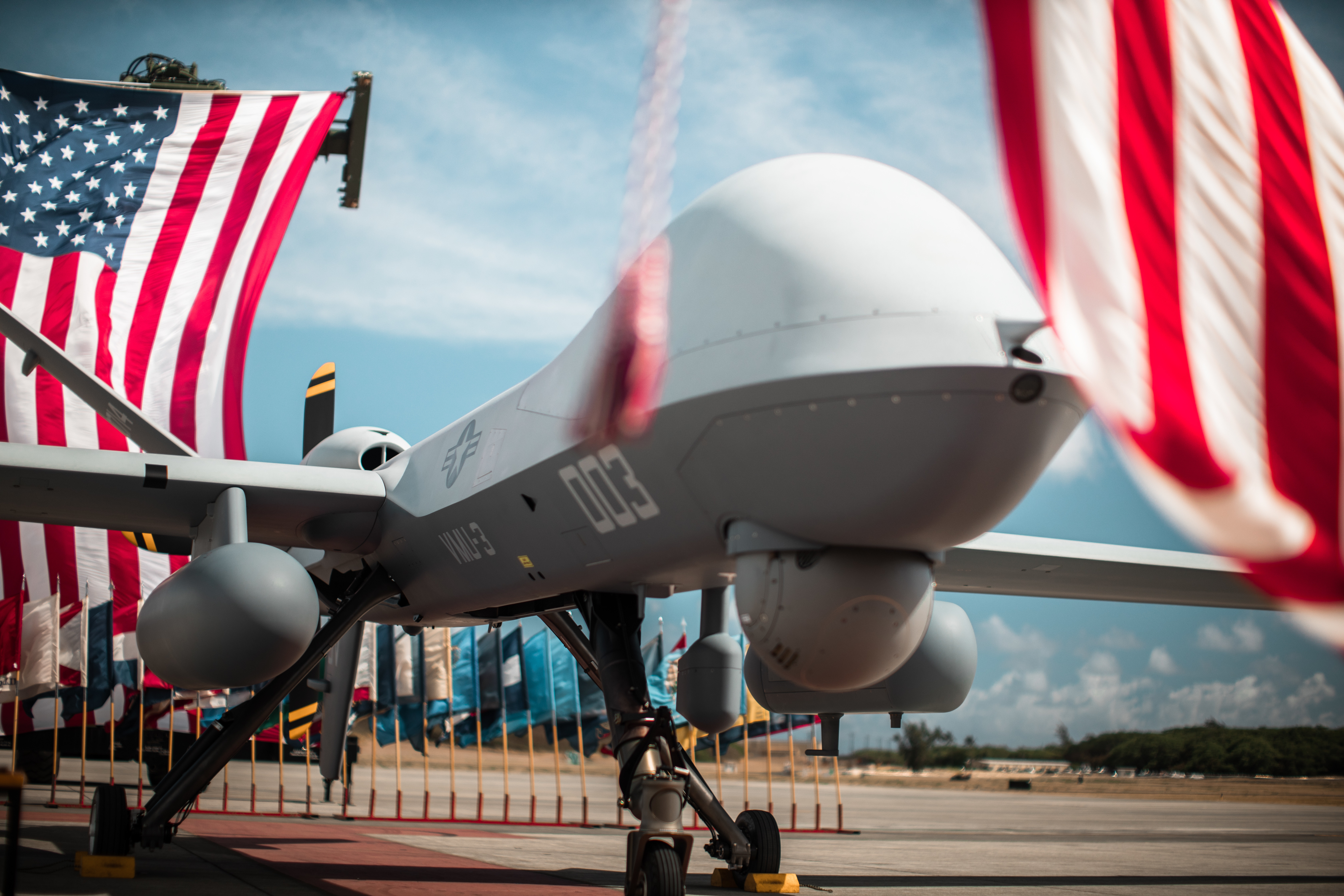
Marine Unmanned Aerial Vehicle Squadron (VMU) 3 marked a significant achievement as they reached Initial Operational Capability (IOC) with the MQ-9A Extended Range Marine Air-Ground Task Force (MAGTF) Unmanned Expeditionary (MUX) Medium-Altitude, High-Endurance (MALE) aircraft. In a unit-led ceremony, VMU-3 commemorated their years of dedicated effort and introduced the operational MQ-9A to Marines, family members, and distinguished guests.
The U.S. Marine Corps MQ-9A MUX/MALE is formally unveiled during a ceremony for Marine Unmanned Aerial Vehicle Squadron 3 (VMU-3), Marine Aircraft Group 24, 1st Marine Aircraft Wing at Marine Corps Air Station Kaneohe Bay, Aug 2, 2023. The ceremony commemorated the squadron’s years of dedicated effort and work to reach Initial Operational Capability with the MQ-9A. VMU-3 can support the Marine Air-Ground Task Force by providing multi-surveillance and reconnaissance, data gateway and relay capabilities, and enabling or conducting the detection and cross cueing of targets and facilitating their engagement during expeditionary, joint and combined operations.(U.S. Marine Corps photo by Cpl. Christian Tofteroo)
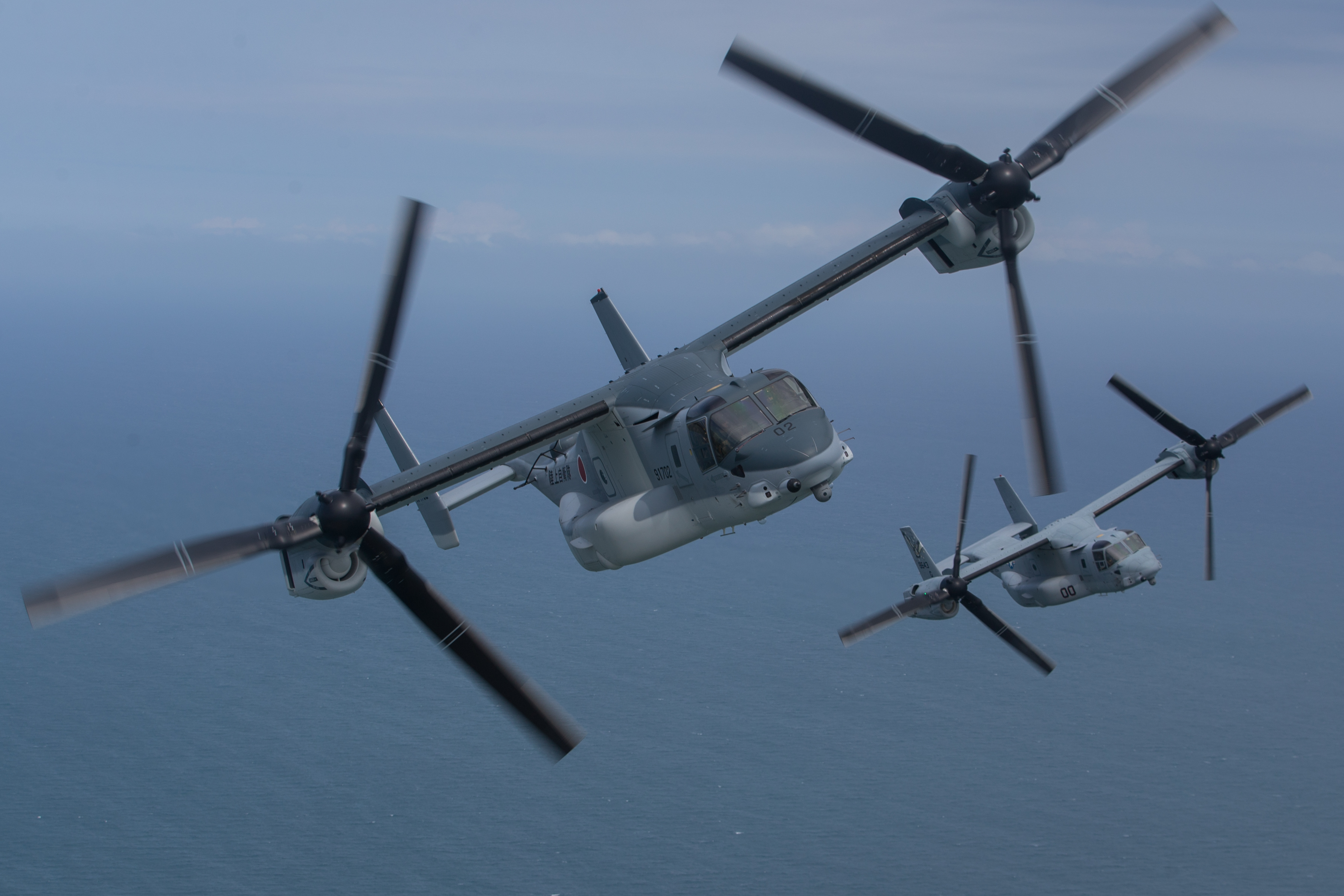
In response to a recent U.S. military report highlighting potential mechanical issues, Japan’s Ground Self-Defense Force (GSDF) has taken the proactive step of suspending flights of its MV-22 Osprey fleet. The report called for the replacement of certain parts to mitigate the risk of accidents, prompting the grounding of fourteen tilt-rotor transport aircraft at the GSDF’s Kisarazu camp in Chiba Prefecture since Jul. 22.
A U.S. Marine Corps MV-22B and a Japan Ground Self-Defense Force (JGSDF) V-22 Osprey conduct aerial maneuvers at Marine Corps Air Station New River, North Carolina, July 9, 2019. Marines assigned to Marine Medium Tiltrotor Training Squadron 204 and JGSDF soldiers conducted a confined area landing exercise as part of their integrated training, strengthening relations and interoperability between the North Atlantic Treaty Organization allies. (U.S. Marine Corps photo by Lance Cpl. Elias E. Pimentel III)