Sikorsky, a Lockheed Martin company, has successfully validated the advanced control laws for its ‘rotor blown wing’ uncrewed aerial system (UAS) in both helicopter and aeroplane modes. This innovative prototype, weighing 115 pounds (52kg) and powered by batteries, has demonstrated operational stability and manoeuvrability across all flight regimes, showcasing its potential for scaling to larger sizes with hybrid-electric propulsion.
Elbit Systems has secured a significant $60 million contract with a NATO European country to supply its advanced ReDrone counter-unmanned aerial system (C-UAS). This deal highlights the growing concern amongst NATO members regarding the increasing threat of unmanned aerial systems (UAS), and their potential misuse by terrorists and smugglers. Elbit Systems, a leading global defence technology company, is set to deliver the ReDrone system over a three-year period.
An unmanned aircraft has crashed at the Jingzhou Olympic Sports Centre in Hubei province while undergoing tests. The incident, which occurred around 11:10 local time on Dec. 12, was first reported via WeChat by the Hubei Jingzhou Economic Development Zone. Images circulating on Chinese social media depict the aftermath, showing a large drone engulfed in flames. One person was reported to be injured in the crash and is currently receiving medical treatment. Authorities have launched an investigation to determine the cause of the accident.
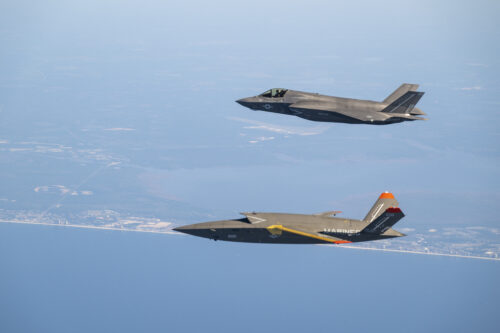
For the first time in a large-force exercise, the United States Marine Corps (USMC) successfully demonstrated cooperative kill chain closure between crewed and uncrewed strike platforms, featuring Kratos’ XQ-58A Valkyrie. The attritable, runway-independent UAV, designed to support manned-unmanned teaming (MUM-T) operations, was a key participant in Emerald Flag 2024. The Valkyrie was developed under the Marine Corps’ Penetrating Affordable Autonomous Collaborative Killer – Portfolio (PAACK-P) program.
The Japan Maritime Self-Defense Force (JMSDF) has taken a decisive step into the future of maritime defence, selecting General Atomics Aeronautical Systems, Inc.’s (GA-ASI) SeaGuardian Remotely Piloted Aircraft (RPA) systems for its Long Endurance Unmanned Aerial Vehicle program. The selection, announced in December 2024, follows over 1.5 years of rigorous testing and evaluation by the JMSDF. The service began its trial operation project with the SeaGuardian in April 2023, putting the system through its paces to assess its suitability for Japan’s challenging maritime environment. This move mirrors a similar decision by the Japan Coast Guard (JCG). On Aug. 15, the JCG signed a contract for the purchase of two SeaGuardian RPAs from GA-ASI, with delivery expected in 2025. This follows the JCG’s ongoing Company-Owned, Contractor-Operated agreement with GA-ASI, which began in April 2022 and has seen SeaGuardians actively supporting a range of JCG missions.