South Korea’s plan to purchase 36 additional AH-64E Apache attack helicopters appears to have been scrapped after the National Assembly slashed the program’s budget from 10 billion won to 300 million won in a supplementary budget passed Jul. 4. The remaining funds are expected to be transferred to other programs, effectively eliminating the 4.7 trillion won ($3.43 billion) deal.
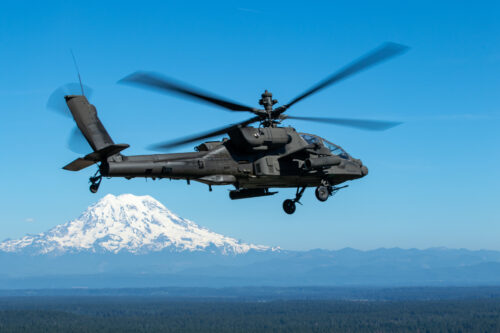
National Assembly member Yoo Yong-won of the People Power Party confirmed the budget cuts, stating that the likelihood of the program’s cancellation has increased significantly. The decision comes after the Joint Chiefs of Staff decided in May to review alternative capabilities, including manned-unmanned teaming systems, rather than proceed with the original Apache purchase plan.
The reconsideration of the Apache deal began in October 2024 when South Korea’s military authorities initiated a comprehensive review of the helicopter acquisition program. The review was prompted by concerns over the vulnerability of attack helicopters observed during the Ukraine war, where Russian helicopters were repeatedly shot down by Ukrainian drones and portable missile systems. Military officials questioned whether allocating 70% of the Republic of Korea Army’s defense improvement budget to Apache helicopters remained a sound investment.
The reassessment occurred despite the U.S. State Department’s approval of the potential sale in August 2024. The Defense Security Cooperation Agency had estimated the total cost at $3.5 billion for a package that included 36 helicopters, weapons systems, Hellfire and Joint Air-to-Ground missiles, and related support equipment. The deal was designed to support U.S. foreign policy goals and strengthen a major Indo-Pacific ally’s defense capabilities.
The shift away from traditional helicopter warfare reflects broader changes in military strategy influenced by modern conflict experiences. Rep. Yoo characterized the move toward unmanned systems as a “positive movement,” noting that the U.S. Army is also retiring older Apache helicopters early and investing in advanced drone capabilities such as the Gray Eagle system. The original requirement for additional Apaches was based on the Moon Jae-in administration’s “Defense Reform 2.0” concept, which was later canceled.
The Apache program cuts were part of a broader 87.8 billion won reduction in defense improvement projects in the supplementary budget. Other affected programs included the General Outpost scientific border system upgrade, which lost 30 billion won, a mobile long-range radar system that lost 12 billion won, 120mm self-propelled mortars that lost 20 billion won, and special operations pistols that lost 13.7 billion won. The Defense Acquisition Program Administration cited various technical and contractual issues for the cuts.
South Korea currently operates 36 Apache helicopters that were introduced in 2017. The cost escalation for the second batch proved significant, with unit prices rising from 44.1 billion won for the first batch to 77.3 billion won for the planned second batch. Army officials had already expressed doubts about acquiring the full 36-unit second batch due to vulnerability concerns highlighted by the Ukraine conflict.
The decision reflects a broader military transformation toward unmanned systems as traditional helicopter warfare faces new challenges. While the program appears canceled for now, potential future reconsideration remains possible under the Trump administration’s expected pressure for increased defense spending among allies.
For more information, hit the Source below