The U.S. Navy successfully demonstrated artificial intelligence-based autonomy on the BQM-177A aerial target in August at Point Mugu Sea Range, California, marking the first beyond-visual-range autonomy mission on a fast-moving platform. The test involved two aircraft operated by Shield AI’s Hivemind software under the Naval Air Systems Command’s Experimental Platform for Intelligent Combat project.
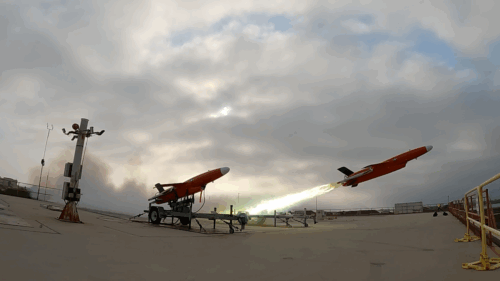
Photo: Shield AI
Naval Air Systems Command’s Strike Planning and Execution program (PMA-281) and Aerial Targets program (PMA-208) partnered with Shield AI to integrate the company’s AI pilot software into the subsonic aerial target. One aircraft demonstrated Advanced Vehicle Control Laws, while the second incorporated additional autonomous behaviors during the demonstration.
“Future air combat will require machine decision-making at machine speed,” said Capt. Todd Keith, PMA-281 program manager. “We’re investing in autonomy now, so we can deliver smarter, more adaptable capabilities to the fleet before they’re urgently needed.”
The demonstration supports the Navy’s manned-unmanned teaming goals and advances implementation of Autonomy Government Reference Architecture-compliant interfaces, a Pentagon framework for enhancing interoperability across autonomous military platforms. Shield AI served as lead systems integrator, with Kratos providing software updates and CTSi developing the mission planning interface.
A second demonstration is planned for later this year featuring up to two BQM-177As flying simultaneously to test multi-platform coordination and human-machine interface integration. The Navy awarded Shield AI the contract in August 2024 under an Other Transaction Authority agreement.
The BQM-177A demonstration represents Shield AI’s eighth aircraft platform integration. The company previously demonstrated autonomous flight on F-16 fighter jets, MQ-35 V-BAT drones, and various quadcopters. In August 2024, Shield AI achieved multi-jet autonomy with two Kratos MQM-178 Firejets performing coordinated maneuvers.
Shield AI’s partnership with Kratos began in June 2023 with an agreement to integrate AI pilot capabilities on the XQ-58 Valkyrie. The company’s Hivemind software enables aircraft to operate independently using real-time sensor data and onboard processing without remote input.
“The team has successfully demonstrated Advanced Vehicle Control Laws while adding some autonomy elements on our BQM-177A aerial target,” said Greg Crewse, PMA-208 program manager. “When fully integrated, this capability will enhance the BQM-177A’s ability to execute more threat-representative maneuvers and simulate realistic interactions with fleet assets.”
The BQM-177A replicates modern subsonic anti-ship cruise missile threats and supports fleet training for developmental and operational testing. Originally designed as a high-performance aerial target, the aircraft serves as a low-cost autonomy research platform generating insights for Navy Collaborative Combat Aircraft concepts.
Advanced Vehicle Control Laws translate high-level mission commands into real-time flight control inputs, enabling threat-representative flight profiles and adversary-style maneuvering. Once fully implemented, the capability will allow more advanced maneuvers and closer engagements for accurate ship interaction simulations.
Capt. Keith emphasized the cost-effectiveness of using virtual and low-cost live air vehicles to evaluate multi-platform mission effectiveness at a fraction of full-scale exercise costs. The approach enables autonomous platform mission development before new air vehicles are built.
“This milestone reinforces that Shield AI is a highly advanced, low-risk, mission-focused partner capable of rapidly integrating autonomy onto new platforms,” said Christian Gutierrez, Vice President of Hivemind Solutions at Shield AI. “It reflects our ability to lead complex system integrations while reinforcing our customer’s goals with reliable, scalable, and interoperable autonomy solutions.”
The BQM-177A’s lower unit cost and cost per flight hour provide a flexible testing environment that accelerates innovation while giving the Navy a strategic asset to de-risk autonomy development when operational assets are unavailable or cost-prohibitive.
For more information, hit the Source below