The Indian Air Force and Royal Thai Air Force will conduct a joint air exercise near the Strait of Malacca on Feb. 9, deploying fighter aircraft and support assets as part of an effort to strengthen operational coordination between the two countries.
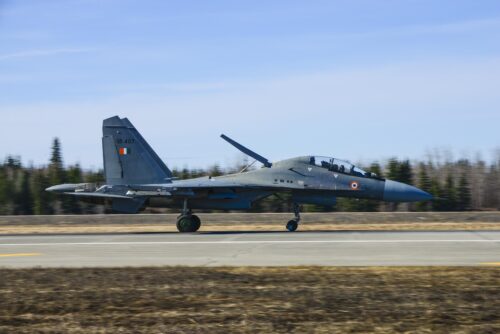
Around five Su-30MKI fighters from the Indian Air Force will train alongside a similar number of Gripen jets from Thailand’s air force. The Indian aircraft will operate from a base in the Andaman and Nicobar Islands, while the Thai Gripens will likely fly from Royal Thai Air Force Base Surat Thani.
The exercise will involve more than just the fighter aircraft. India is deploying mid-air refueling tankers and an Airborne Warning and Control System aircraft to support extended-range operations and provide airborne surveillance during the drills. Out at sea, Indian Navy warships are expected to handle search-and-rescue activities.
The location holds particular significance. The Strait of Malacca ranks among the world’s busiest maritime corridors, linking the Indian and Pacific Oceans while carrying a substantial portion of global trade and energy shipments. The dense concentration of maritime and air traffic makes the area operationally relevant for air forces working on surveillance, sea lane security, and coordinated operations in congested environments.
The deployment of support aircraft alongside the fighters suggests the exercise will focus on realistic operational scenarios rather than basic flying maneuvers. AWACS aircraft provide situational awareness across large areas, while aerial refueling extends the operational range of combat aircraft—both critical capabilities for operations over maritime expanses like those surrounding the Malacca Strait.
The exercise comes as regional powers pay increasing attention to sea lane security in the Indo-Pacific. The Malacca Strait serves as a chokepoint for shipping between the Middle East and East Asia, with any disruption carrying potential economic consequences across multiple continents.
Neither country has released detailed information about specific training objectives or the duration of the exercise.
For more information, hit the Source below