Singapore’s Urban Redevelopment Authority’s 2025 Master Plan has revealed the post-reclamation configuration of Pulau Sudong, showing a significantly expanded military airfield that could extend the island’s existing runway from 2,000 meters to approximately 3,000 meters. The expansion, scheduled for completion by 2028, could potentially address growing Republic of Singapore Air Force (RSAF) training requirements while mitigating aircraft noise pollution affecting mainland residential areas.
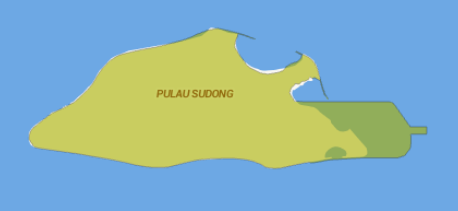
Image: URA master plan 2025
The extended runway will enable the RSAF to conduct F-35B landing training at the offshore location, reducing the noise burden on populated areas currently exposed to the advanced fighter’s operations. The facility will also allow other RSAF fixed-wing aircraft to conduct practice landings that are presently carried out at Tengah and Paya Lebar airbases, both of which are surrounded by residential neighborhoods that have experienced increasing complaints about jet noise.
According to the article from Straits Times, the Housing and Development Board (HDB) will reclaim approximately 31.1 hectares of land on the eastern part of Pulau Sudong to accommodate the runway upgrade and associated infrastructure. The project, which began procurement in 2024, will also include construction of a new sea-wall revetment around the periphery of the reclaimed area. HDB stated in January 2024 that the upgrade will “improve flight safety, especially during bad weather.”
Singapore’s F-35B Acquisition and Deployment
The Ministry of Defence (MINDEF) announced in March 2019 the purchase of an initial four F-35B short take-off and vertical-landing fighter aircraft, with an option to acquire eight more subsequently. Following what MINDEF described as an extensive and robust evaluation, the ministry exercised the option in 2023 to purchase eight additional F-35Bs. In Feburary 2024, Singapore announced the purchase of eight F-35A conventional takeoff and landing (CTOL) variants. The F-35s will replace aging F-16s, which will progressively draw down after reaching obsolescence from the mid-2030s. A briefing by Lockheed Martin at the Singapore Airshow 2026 suggests the first F-35s will arrive in Tengah airbase in 2029.
Addressing the F-35B Noise Challenge
The Pulau Sudong expansion comes as the RSAF prepares to bring home its F-35B fleet. Japan’s Ministry of Defense documentation from March 2025 provides detailed noise specifications for F-35B vertical landing operations, revealing that the maneuver generates approximately 130 decibels at 75 meters from the landing point and 110 decibels at 300 meters, based on a 2013 United States study. Each vertical landing takes approximately two minutes to complete, compared to roughly 20 seconds for a conventional landing. The noise impact has prompted similar infrastructure investments in Japan, where vertical landing training for the F-35B will be partially relocated to the remote Mageshima Island.
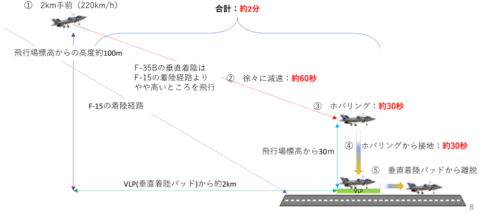
Image: Japan Ministry of Defense
Singapore residents living near existing airbases have documented noise concerns from fighter jets. In an article by 8days.sg last October, a Sengkang resident posting on social media platform Xiaohongshu reported counting five to six aircraft flying overhead within 30 minutes while working from home, describing the noise from what appeared to be jets as “exceptionally loud.” The post drew responses from residents in Punggol, Potong Pasir, Buangkok, and Hougang reporting comparable experiences, with one Punggol resident noting that the noise occasionally causes buildings to shake slightly and forces interruption of online meetings.
In a February 2024 parliamentary response, then Minister for Defence Dr. Ng Eng Hen outlined existing noise abatement measures, including conducting approximately 50 percent of RSAF flying training requirements overseas, shifting some local flying requirements to simulators, planning flight routes away from residential areas where possible, and adjusting flying training tempo during school examination periods. The minister also detailed architectural mitigation measures for new developments near airbases, such as thicker window glass, facade designs with sound-deflecting overhangs, and building orientation away from direct flight paths.
Operational and Emergency Capabilities
The current 2,000-meter runway at Pulau Sudong functions primarily as an emergency landing point for fighter aircraft. However, the limited runway length means that fighter aircraft landing there in an emergency may require the use of Mobile Aircraft Arrestor Systems installed on both ends of the runway to stop the aircraft in time. The extended 3,000-meter runway will provide emergency landing capability for fighters and larger aircraft types with a longer distance for aircraft to decelerate safely, negating the need to deploy the arrestor systems in most situations.
The expansion might also consolidates training operations currently distributed across multiple mainland facilities. Fixed-wing landing and take-off training conducted at Tengah and Paya Lebar can be partially relocated to the offshore island, providing operational flexibility as the RSAF manages the transition associated with Paya Lebar’s eventual decommissioning after 2030 and Tengah’s expansion.
Procurement and Construction
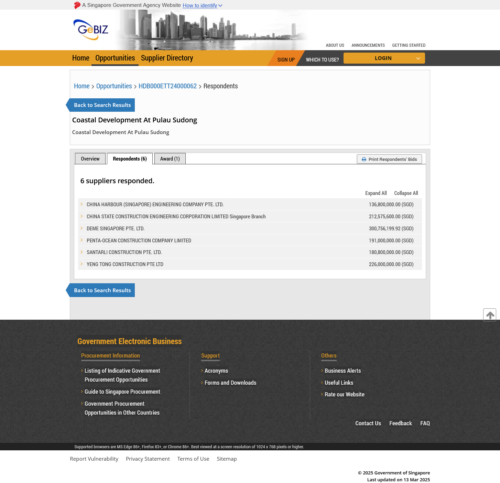
The Housing and Development Board launched the coastal development tender, designated HDB000ETT24000062, in March 2024. It closed on Jul. 17, 2024, with six companies submitting bids ranging from SGD 136.8 million to SGD 300.76 million. China Harbour (Singapore) Engineering Company Pte. Ltd. submitted the lowest bid at SGD 136.8 million, followed by Santarli Construction Pte. Ltd. at SGD 180.8 million and Penta-Ocean Construction Company Limited at SGD 191 million. China State Construction Engineering Corporation Limited Singapore Branch bid SGD 212.6 million, while a consortium of Dredging International Asia Pacific Pte Ltd and Woh Hup (Private) Limited submitted the highest bid at SGD 300.8 million. The winning bid went to Santarli Construction Pte. Ltd.
Environmental Impact and Mitigation
An environmental impact assessment conducted by enviromental consultant DHI for the authorities quantified significant habitat losses from the proposed reclamation. The report found that construction will result in the loss of approximately 2 hectares of coral reefs, representing about 1.8 percent of Singapore’s overall coral reef cover. Additionally, approximately 17.28 hectares of intertidal habitat, 71.91 hectares of soft seabed habitat, and 229 mangrove trees covering 1.46 hectares will be lost.
Environmental volunteers from the Wild Shores of Singapore group conducted what they described as a “first and last survey” of Terumbu Palat, a trio of tiny submerged reefs east of Pulau Sudong likely to be buried in the reclamation. The team documented diverse marine life including giant carpet anemones with clownfish, various flatworms and nudibranchs, spider conch, and large sea urchins.
HDB stated that mitigation measures will be implemented to minimize ecological and biodiversity impacts. The DHI assessment recommended that rare and uncommon coral species be transplanted to surrounding islands such as Pulau Hantu, Pulau Semakau, and Sisters’ Islands.
Historical Context
Pulau Sudong’s military designation dates to the 1970s, when the island was gazetted for military use and its inhabitants were resettled to mainland Singapore. In 1960, the island supported a population of 393 residents, predominantly Malay, with approximately four Chinese families operating shops. The community made its living through fishing and collecting corals and weeds from the sea for sale to Singapore business firms.
In the 1970s, many islanders accepted resettlement to the West Coast area of mainland Singapore, with many drawn to work at Pulau Bukom’s petroleum tank depot and oil refinery on the assurance of steady income.
In 1976, Parliament approved reclamation of approximately 242.82 hectares of foreshore and seabed at Pulau Sudong at a cost of SGD 64 million. Then-Minister for Law and Environment E.W. Barker proposed converting the island into a recreational area and later into an industrial area. The Port of Singapore Authority awarded contracts to Toa Harbour for reclamation and Swee Construction for shore protection works, with Toa Harbour also tasked to construct two lagoon beaches. Although reclamation work began in December 1976, concrete plans to convert the island into recreational centers remained unrealized.
The island was closed to the public on Jul. 24, 1982, when the Sentosa Development Corporation announced the closure was necessary for public safety as the island fell within the live-firing zone of military exercises. In 1989, Pulau Sudong was officially gazetted as a live-firing area for Singapore Armed Forces military exercises, joining Pulau Pawai and Pulau Senang. The island currently measures 208.5 hectares, according to 2013 data. The runway there was reportedly constructed in 1994 by a company called L & M.
The Pulau Sudong expansion represents a strategic infrastructure investment that balances RSAF operational requirements with urban noise mitigation and environmental stewardship obligations. As the RSAF integrates its F-35B fleet into operations over the coming years, the expanded Pulau Sudong facility could play an increasingly important role in maintaining pilot proficiency while minimizing noise impact on Singapore’s densely populated urban areas.