The U.S. Marine Corps has awarded Sikorsky a $15.5 million contract to develop and demonstrate an autonomous cargo helicopter for frontline resupply missions, selecting a commercially developed aircraft over a purpose-built military design.
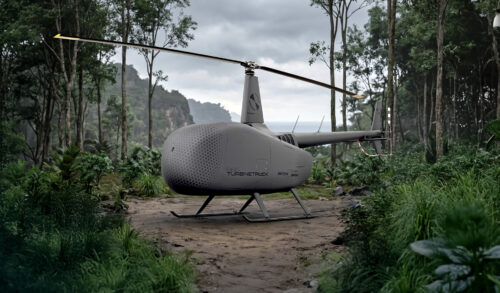
Image: Robinson Unmanned
The contract funds the Medium Aerial Resupply Vehicle – Expeditionary Logistics (MARV-EL) Increment 2 program. The selected aircraft is the R66 TURBINETRUCK, an uncrewed helicopter jointly developed by Sikorsky and Robinson Unmanned that strips the cockpit from Robinson’s production R66 turbine airframe and replaces it with a dedicated cargo hold.
The MARV-EL program addresses a capability vacuum between the small tactical drones already in service and the large strategic airlifters that require established infrastructure. Neither fills the role of a medium-lift platform that can push supplies such as ammunition, medical equipment, critical gear into contested areas without putting a crew at risk.
The program requires an aircraft capable of carrying between 1,300 and 2,500 pounds of payload to a combat radius of 100 nautical miles. The TURBINETRUCK, with a useful load of up to 1,500 pounds and a range exceeding 325 nautical miles, meets those parameters while drawing on an airframe that already has a global maintenance and parts network behind it.
The Sikorsky-Robinson collaboration is newer than the hardware might suggest. The two companies unveiled the TURBINETRUCK only in March 2026, with Sikorsky contributing its MATRIX autonomy system and Robinson providing the airframe and manufacturing infrastructure.
Robinson has been building helicopters for more than 50 years, and its R66 has earned a reputation as a durable, cost-effective turbine platform which makes it an attractive candidate for autonomous conversion. Sikorsky, meanwhile, had already participated in the Marine Corps’ earlier Aerial Logistics Connector Phase 1 program in 2025, giving it operational footing when MARV-EL Increment 2 went to contract.
Central to the program is Sikorsky’s MATRIX autonomy suite, now integrated across 21 aircraft with more than 1,000 flight hours of operational data. An operator enters mission objectives into a tablet; MATRIX generates a flight plan and navigates the aircraft autonomously using onboard cameras, sensors and algorithms.
The airframe has been reconfigured for cargo operations, with a flat load-bearing floor, seven tie-down points, a full-width front clamshell door for palletized freight, and external hook support for slung loads.
Robinson Unmanned will deliver the first TURBINETRUCK to Sikorsky for integration, testing and evaluation, followed by capability demonstrations. The aircraft is positioned as a complement to Sikorsky’s heavier S-70UAS U-Hawk.
“Together, we are delivering a capability that will enhance warfighter readiness and open new opportunities for safe, reliable and affordable autonomous transport,” said David Smith, president and CEO of Robinson Helicopter Company.
Both companies have signaled interest in civil applications beyond the Marine Corps contract, including disaster relief and remote-site resupply.
For more information, hit the Source below