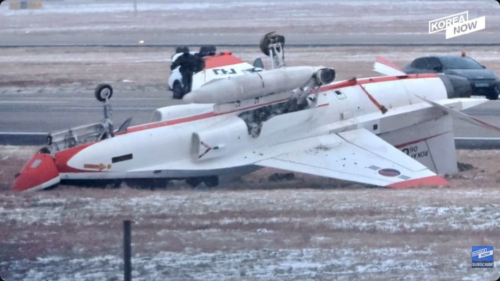
A malfunction in the anti-skid braking system caused a Republic of Korea Air Force T-50 advanced trainer aircraft to rollover during an emergency landing on Jan. 2, investigators announced Jan. 7, concluding their initial examination of the incident at Gwangju Air Force Base.
Screengrab from YouTube
The system failure caused the aircraft’s landing gear tires to burst during the landing roll, leading the trainer to veer off the runway and rollover. The anti-skid system, which functions similarly to an automotive anti-lock braking system, is designed to automatically modulate brake pressure to prevent wheel lock-up during landing operations.
The Air Force stated that the system failed to activate properly as the crew attempted to slow the aircraft following an emergency landing. Without the automatic pressure modulation, uncontrolled braking forces caused the tires to fail, resulting in a loss of directional control.
Investigators are continuing a detailed examination to determine why the anti-skid system malfunctioned. The service has not yet released findings on whether the failure resulted from mechanical defects, maintenance issues, or other factors.
The incident began at approximately 2:36 p.m. local time when an engine warning light illuminated during a routine training flight. An instructor pilot and student pilot were aboard the aircraft when the warning appeared. The instructor initiated emergency landing procedures and successfully touched down on the runway at Gwangju base.
Air Force investigators determined that the engine warning resulted from a separate malfunction in the aircraft’s fuel control unit, which regulates fuel supply and pressure. The service has assessed that this fuel system issue had no direct connection to the subsequent overturn accident.
Both crew members escaped without serious injuries and were transported to a hospital for examination. The Air Force confirmed both pilots remain in good health and have been cleared to return to duty.
The service established an accident response headquarters under the service’s Deputy Chief of Staff and immediately grounded the entire T-50 fleet except for essential missions. Air Force maintenance personnel conducted comprehensive inspections of anti-skid systems and related components across all T-50 aircraft in the fleet.
Following the completion of these inspections, which revealed no additional anomalies in other aircraft, the Air Force announced it would resume T-50 flight operations on Jan. 8. The damaged aircraft is being evaluated for repair and potential return to service.
The T-50 represents South Korea’s first domestically-developed supersonic advanced trainer aircraft. Korea Aerospace Industries developed the aircraft with technical support from Lockheed Martin. The accident aircraft was from the initial production batch.
The trainer has achieved significant export success, with South Korea delivering T-50 variants to Indonesia, Iraq, Thailand, and Poland. The FA-50 light attack variant has proven particularly popular with international customers.
Gwangju Civil Airport, which shares runway facilities with the Air Force base, continued normal operations throughout the incident. A portion of the runway was temporarily restricted during the accident investigation.
For more information, hit the Source below