A University of Waterloo undergraduate is facing federal charges in the United States after admitting to investigators he photographed aircraft at Chicago’s O’Hare International Airport for a contact he believed worked for the Chinese government, according to court documents reviewed by The Detroit News, CP24 and CBC News. What separates the case from ordinary plane spotting, a hobby practiced openly using the same vantage points and flight-tracking tools, is not the camera but the tasking behind it.
Weiheng Zeng, 20, a Chinese national studying at Waterloo, was charged in Detroit federal court with making false statements, not espionage. He was arrested Aug. 23 while crossing the Ambassador Bridge from Windsor, Ontario, and has agreed to remain in custody pending trial, CBC News reported.
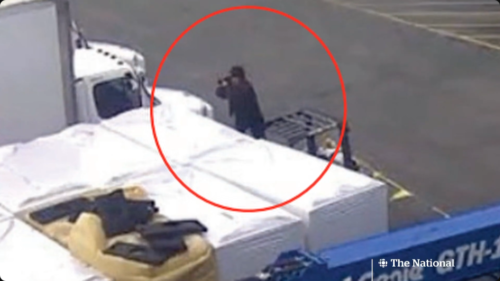
The case began with FedEx surveillance video at O’Hare on Apr. 21. A man loitered in the employee lot for about 20 minutes, walked the fence line, tried opening locked trailers and climbed onto a forklift for a better angle, the complaint says. Investigators linked the incident to a minivan with Ontario plates, and eventually to Zeng.
A shifting timeline
Zeng had entered the U.S. roughly two dozen times since his visa was issued in 2022. He drove into Detroit on Apr. 11, saying he was visiting his sister in Chicago. Ten days later came the FedEx incident, and two days after that he returned to Canada. He surfaces again Aug. 23, attempting to re-enter in the same vehicle. Agents referred him for secondary inspection, leading to three interviews with CBP and the FBI, during which his account kept changing.
At first, Zeng said little beyond photographing planes as a hobby, CP24 reported. Agents found photos of military aircraft on his phone alongside images of him in tactical clothing holding rifle-style weapons, which he said were airsoft replicas. His story on the O’Hare incident shifted from a public parking lot to admitting he had climbed a forklift on FedEx property.
By the third interview, Zeng told the FBI a contact in China had assigned him specific aircraft to photograph by tail number, paying $20 to $30 per photo. He said the two met in late 2024 on an aviation forum and, after months of messaging, agreed to help because he thought it was “cool.” Agents later found no evidence the forum existed, according to CBC News. Zeng also said he had trespassed at a FedEx facility at Toronto Pearson for the same contact in October 2025, getting only exterior photos before being confronted, for which he was paid about $200.
The alleged tradecraft
Investigators describe something beyond a simple photo-for-cash exchange. Zeng said his contact mailed him a new China Telecom SIM card every few months to use on his Huawei phone, letting him bypass Canadian networks, then burn each old SIM and delete messages and photos. He also said the contact sent him an image of a badge with the Tiananmen Square emblem and video only security officials would access.
Zeng eventually admitted his cover story about rare aircraft was not the real assignment; the contact wanted transportation logistics and photos of locations around airport perimeters, and had also asked him to photograph sites in Orlando, Las Vegas and Los Angeles, which he declined. Payment came through yuan transfers to a Bank of China account, totaling about $500.
Legal proceedings and reaction
Zeng faces one count of making false statements, punishable by up to five years in prison and a $250,000 fine. Prosecutor Alyse Wu argued he posed a flight risk, saying his only apparent connection to the district was as a crossing point for espionage-type activity, CBC News reported. Zeng, assisted by a Mandarin interpreter, has consented to remain in custody. The allegations are untested in court.
The University of Waterloo said it does not typically discuss ongoing criminal matters, and Waterloo police said they were not involved. A spokesperson for the Chinese embassy in Ottawa said it opposes the hyping up of a “China spy threat” narrative.
What it means for the spotting community
Photographing aircraft from public property and trading tail-number images online are standard parts of spotting culture, and nothing in the complaint suggests that activity itself drew scrutiny. What investigators flagged was the combination around it: assigned targets tied to payment, requests that expanded into logistics and transit routes, communications gear built to avoid network oversight, and access well past the etiquette most spotters observe.
Zeng’s case is still pending, and much about his contact remains unconfirmed.